Fayetteville’s expansion southward along the West Fork White River and into the steeper terrain of the Boston Mountains has placed unprecedented demand on foundation systems that must contend with the region’s weathered shale residuum and colluvial deposits. The Standard Penetration Test remains the linchpin of subsurface reconnaissance across Washington County, delivering repeatable N-values that engineers translate directly into allowable bearing pressures and settlement estimates using local correlations developed for the Boone-St. Joe limestone transition. While the IBC and ASCE 7 define the structural performance criteria, it is the raw data from a properly executed SPT program—hammer energy calibrated, sampler geometry verified, borehole cleaned to refusal depth—that determines whether a site in zones mapped as seismic class D or E can support the proposed structural loads without excessive consolidation settlement in the deep chert-laden clays that characterize the Springfield Plateau.
N60 values below 8 in the alluvial terraces of the West Fork White River demand a rigorous liquefaction screening protocol, particularly for sites within Fayetteville’s mapped seismic site class D and E boundaries.
Scope of work in Fayetteville Arkansas
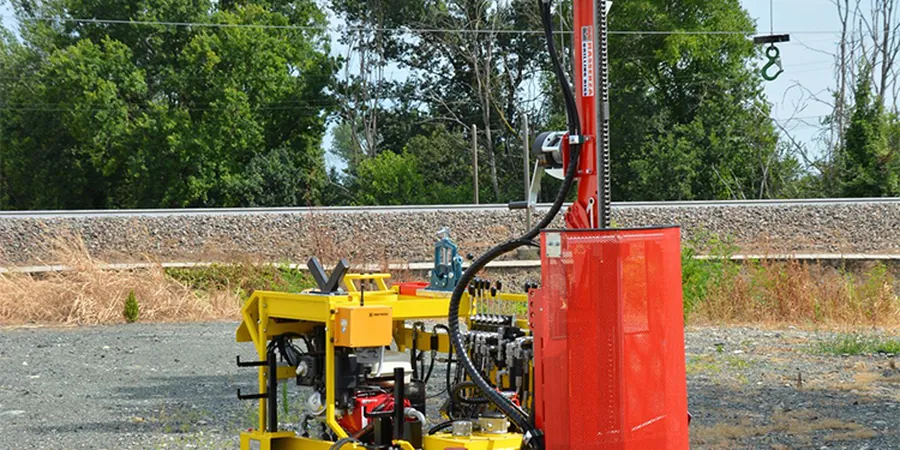
Critical ground factors in Fayetteville Arkansas
ASCE 7-22 Section 11.4.8 requires site-specific shear wave velocity or penetration resistance data for Site Class D and E profiles, a category that encompasses much of Fayetteville’s developed valley floor where soft alluvial silts overlie karst-prone limestone. Misinterpreting SPT refusal—defined as 50 blows over 150 mm—in a borehole that encounters a thin chert float block rather than a competent bearing stratum can lead to a false sense of security: the underlying material may be loose, water-charged silt incapable of supporting a shallow footing. This risk is compounded in the transition zone between the Hale Formation sandstone and the Pitkin Limestone, where pinnacled bedrock topography creates highly variable refusal depths over distances of less than 10 meters. A defensible exploration program must therefore extend borings to at least 9 meters or to three consecutive refusal intervals, whichever is deeper, and correlate SPT data with continuous rock coring when the site program requires deep foundations socketed into competent limestone.
Our services
The SPT program in Fayetteville’s variable geology is rarely a standalone deliverable. It integrates with laboratory classification and advanced in situ testing to produce a complete geotechnical model.
SPT-Based Foundation Design Package
Combines SPT N60 profiles with laboratory index testing to deliver net allowable bearing pressure charts, elastic and consolidation settlement predictions, and liquefaction screening per the NCEER simplified procedure. Each report includes boring logs drafted to Arkansas Department of Transportation standards, stratigraphic cross-sections, and a foundation recommendation letter sealed by a licensed professional engineer registered in the State of Arkansas.
Correlation Testing and Geotechnical Laboratory Suite
SPT samples are paired with companion thin-wall Shelby tube specimens for unconsolidated-undrained triaxial compression (ASTM D2850) and one-dimensional consolidation (ASTM D2435), establishing site-specific correlations between N60 and undrained shear strength. Grain size distribution (ASTM D6913) and Atterberg limits complete the physical characterization required for the FHWA GEC No. 5 shallow foundation design methodology.
Common questions
How deep are typical SPT borings for a commercial building in Fayetteville?
For commercial structures in the Fayetteville city limits, the minimum boring depth mandated by IBC Section 1803.5.2 is 9 meters below the lowest foundation element. However, in areas underlain by the Pitkin Limestone—common along the Crossover Road corridor—borings must continue to 3 meters into competent rock or to three consecutive refusal intervals to rule out the influence of isolated chert blocks. The actual depth is determined by the structural loads, the footprint dimensions, and the results of the initial borings as the stratigraphy is revealed.
How much does an SPT investigation cost for a residential lot in Fayetteville?
Does SPT data satisfy the Fayetteville building department’s seismic requirements?
Yes, provided the N-values are corrected to N60 and N1,60 following the procedures outlined in the NCEER (Youd et al. 2001) workshop summary. Fayetteville’s building department accepts SPT-based liquefaction potential assessments for Site Class D and E profiles when the investigation includes energy calibration of the hammer system and the boreholes are drilled with hollow-stem augers rather than rotary wash to avoid disturbance of the critical upper 15 meters.
What soil types in Fayetteville cause the most problems during SPT sampling?
The weathered shale residuum of the Hale Formation, which mantles the hillslopes north of the University of Arkansas campus, presents the greatest challenge. This material behaves as a stiff, fissured clay when above the water table but degrades rapidly to a slurry under circulation water, causing borehole collapse before the sampler can be driven. The solution involves casing the upper 3 meters and using a hollow-stem auger with a center plug to maintain borehole stability through the transition zone until competent shale is encountered. More info.