Fayetteville grew from a small county seat into a regional hub that now stretches across the Springfield Plateau, where the Mississippian Boone Formation limestone weathers into a mantle of reddish silty clay. Every new subdivision carved into the hillsides east of College Avenue or commercial pad north of the Fulbright Expressway sits on residual soil that shifts dramatically with moisture, and that is where a Proctor test becomes the linchpin of earthwork quality control. The laboratory compaction curve establishes the target density that field crews must achieve with sheepsfoot rollers or vibratory compactors, and without it the risk of differential settlement under Arkansas’s freeze-thaw cycles rises sharply. The local practice combines ASTM D698 Standard Proctor for landscape and utility trench backfill with ASTM D1557 Modified Proctor for structural fill beneath footings and mat foundations, because the higher compactive effort better replicates the stress from heavily loaded slabs on grade that the IBC requires engineers to verify.
A 1 percent deviation below Proctor maximum in Fayetteville residual clay can reduce the resilient modulus by nearly 15 percent — compaction is not a target, it is a material property.
Scope of work in Fayetteville Arkansas
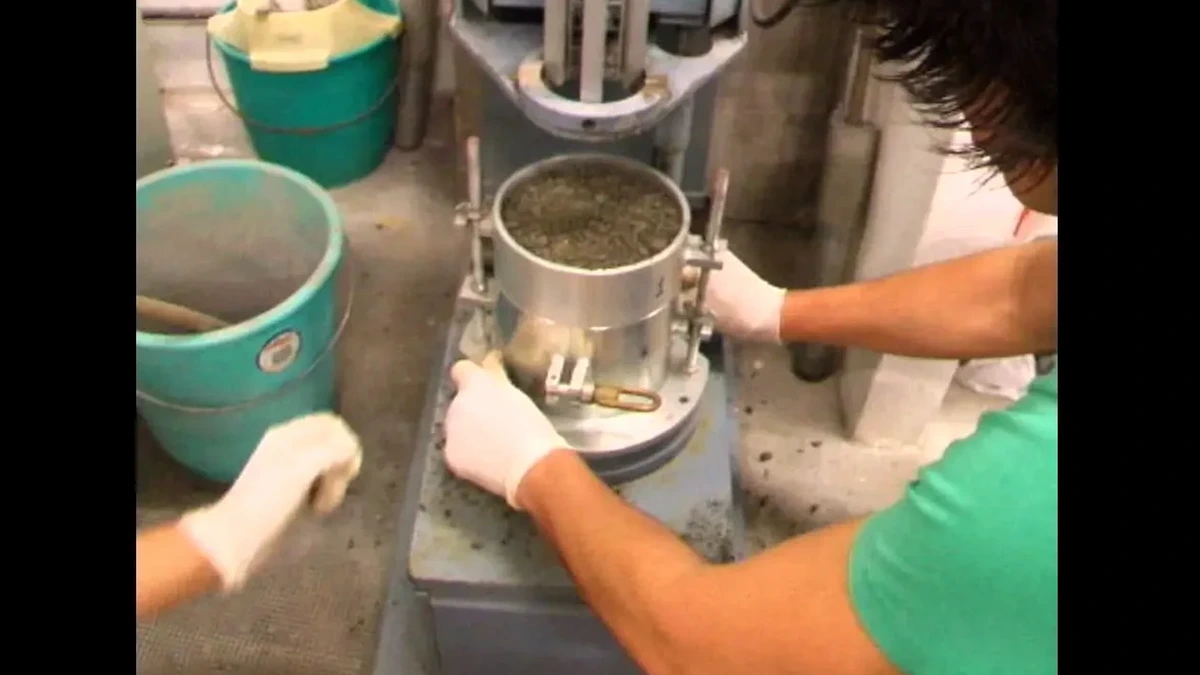
Critical ground factors in Fayetteville Arkansas
Field observations around Fayetteville’s rapidly developing western corridor show that contractors sometimes compact residual clay at moisture contents 3 to 5 percent above optimum because it feels workable under the roller, yet the Proctor curve tells a different story: that same material will lose significant shear strength as pore pressures dissipate over the first wet-dry cycle. The risk manifests as slab curling, asphalt alligator cracking within the first two winters, and utility trenches that settle below the pavement grade, creating the classic washboard ride along streets like Rupple Road after a heavy spring rain. When the Proctor is skipped or performed on a grab sample that does not represent the borrow source actually delivered, the earthwork specification becomes a paperwork exercise rather than an engineering control, and the cost of remediating under-compacted fill beneath a post-tensioned slab can exceed the original compaction testing budget by a factor of twenty. For sites within the IBC seismic design category that governs Washington County, density verification against a properly established Proctor curve is also the first step in demonstrating that the bearing stratum will not degrade during the design earthquake, which links compaction control directly to life safety.
Our services
The Proctor test anchors a broader earthwork quality assurance program that starts in the lab and extends to the fill lift. The following services address the full chain of compaction control for Fayetteville projects.
Standard Proctor (ASTM D698)
Determines the maximum dry density and optimum moisture content using the 12,400 ft-lbf/ft³ compactive effort. Specified for landscape fill, utility trench backfill, and lightly loaded slabs where the design bearing pressure stays below 2,000 psf. The lab report includes the full compaction curve, ZAV line, and a moisture-density specification range that field technicians use for nuclear gauge or sand cone acceptance testing.
Modified Proctor (ASTM D1557)
Applies the 56,000 ft-lbf/ft³ compactive effort that better represents the stress from modern vibratory rollers and heavy highway loading. Required for structural fill beneath mat foundations, pavement subgrade on arterial roads, and any engineered fill where the geotechnical report specifies a relative compaction of 95 percent or higher. The team can run both Standard and Modified curves on the same borrow material when the project transitions from landscape to structural zones.
One-Point Proctor & Rapid Field Verification
When borrow source changes mid-project — a common scenario in Fayetteville subdivisions where cut sections expose different members of the Boone Formation — the one-point Proctor provides a quick check that the lab curve is still valid. The method uses a single compaction point and the family-of-curves concept to estimate maximum density within ±3 pcf, allowing the earthwork superintendent to make same-day decisions without halting production.
Common questions
What does a Proctor test cost for a Fayetteville residential lot?
Which Proctor method does the City of Fayetteville require for building permits?
The City of Fayetteville Building Safety Division follows IBC 2021, which does not mandate a specific Proctor method but requires that compacted fill meet a density standard tied to a laboratory compaction curve. For most commercial and multi-family projects, the geotechnical engineer’s report specifies Modified Proctor (ASTM D1557) with a minimum relative compaction of 95 percent for structural fill. Residential single-family lots on undisturbed residual soil may only need Standard Proctor (ASTM D698) for utility trench backfill, but the final determination rests with the project’s geotechnical consultant and the city’s plan reviewer.
How long does it take to get Proctor test results in Fayetteville?
A full five-point Proctor curve typically requires two to three working days from sample receipt, because the soil must be dried, processed, and compacted at incrementally increasing moisture contents with a 16-hour moisture conditioning period if the wet method is used. The lab can expedite results to 24 hours for a surcharge when the contractor is mobilizing and needs the specification before the first lift is placed. One-point rapid verification can often be turned around same-day if the sample arrives by mid-morning.
Can you run a Proctor on soil that contains shale fragments from the Boone Formation?
Yes. The standard procedure per ASTM D698 and D1557 uses material passing the No. 4 sieve, so shale fragments larger than 4.75 mm are scalped and the final result is corrected using ASTM D4718 if the oversized fraction exceeds 5 percent by dry mass. For Boone Formation weathered shale, which can slake during compaction, the lab often runs the test using the wet preparation method to simulate field breakdown under a roller, and the report notes the percent retained on each sieve so the field technician can adjust the nuclear gauge reading for rock content.