The subgrade conditions beneath a pavement structure can shift dramatically across Fayetteville, even within the same project site. Soils derived from the Boone Formation limestone in the east part of town behave nothing like the residual clays found near the West Fork of the White River, where moisture sensitivity becomes the dominant design variable. This geotechnical variability demands a pavement design approach that goes well beyond a standard catalog section, incorporating site-specific resilient modulus values and thorough drainage analysis. For projects ranging from commercial parking areas off Joyce Boulevard to residential streets in the hillside subdivisions, the CBR road subgrade assessment provides the foundational strength parameter, while grain size distribution testing confirms the fines content that often dictates long-term performance under repeated traffic loading.
AASHTO 93 remains the most reliable framework for the Ozark region, but its accuracy depends entirely on site-specific subgrade resilient modulus values, not assumed defaults from generalized soil maps.
Scope of work in Fayetteville Arkansas
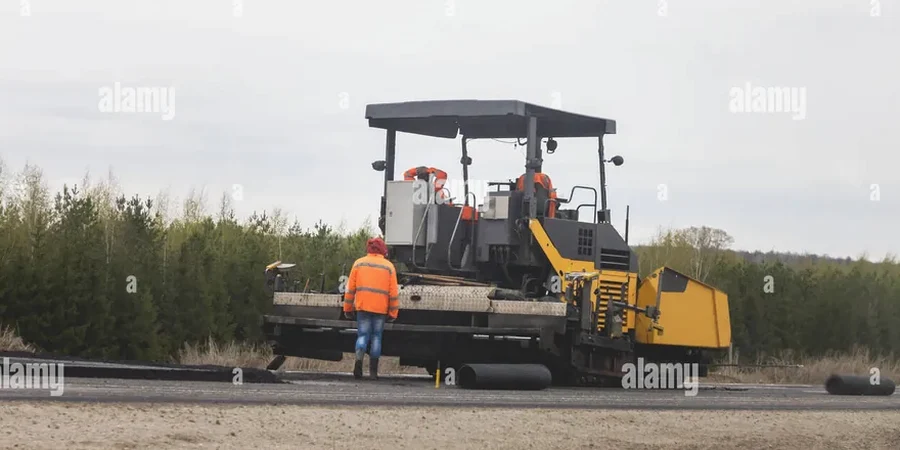
Critical ground factors in Fayetteville Arkansas
In Fayetteville, we often see pavement failures that trace back to a single overlooked detail: the perched water table that forms above the shale bedrock during spring. A pavement section designed with summer soil strengths will exhibit alligator cracking within three to five years because the subgrade modulus drops dramatically once the moisture content rises. This seasonal weakening is particularly severe in the shallow valleys east of I-49, where clay-rich colluvium holds water against the pavement base. Another common problem involves inadequate treatment of expansive subgrades, where cyclic swelling and shrinkage of the fat clays transfers differential movement up through the asphalt layers. The most cost-effective designs in this region incorporate a non-woven geotextile separator between the subgrade and base course, a detail that adds minimal initial cost but prevents the fines migration that undermines pavement performance over thousands of load cycles.
Our services
The pavement design process in Fayetteville integrates several specialized geotechnical services, each contributing a necessary parameter to the structural model. The following three services form the technical backbone of our flexible pavement design approach in Northwest Arkansas.
Subgrade Resilient Modulus Determination
We derive the resilient modulus (Mr) through laboratory repeated load triaxial testing on undisturbed Shelby tube samples or through established CBR-to-Mr correlations for coarse-grained soils. This parameter directly feeds the AASHTO structural number calculation and eliminates the risk of using default values that do not reflect the weathered Boone Formation residual soils common to Fayetteville.
Traffic Analysis and ESAL Projection
Accurate traffic characterization requires more than counting trucks. We develop 20-year ESAL projections based on land use type, vehicle classification counts, and growth rates specific to the Northwest Arkansas metropolitan area. For industrial facilities near the Fayetteville Executive Airport, the loading spectrum often includes heavy forklift traffic that must be converted to equivalent axle loads.
Thickness Design and Layer Optimization
Using the AASHTO layer coefficient method, we optimize the combination of asphalt concrete surface course, crushed aggregate base, and subbase thicknesses to achieve the target structural number at the lowest practical cost. The analysis includes a drainage coefficient adjustment based on the site's hydraulic conductivity test results and the expected moisture exposure over the design life.
Common questions
What is the typical design life for a flexible pavement in a commercial development in Fayetteville?
We normally design for a 20-year structural life, which is standard for commercial access roads and parking areas in Fayetteville. The design accounts for the projected ESALs over that period, and we apply a reliability factor of 80-85% depending on the road classification. The actual functional life depends on maintenance, but the structural section should not require major rehabilitation before that term if traffic does not exceed the design assumptions.
How do the local soils in Northwest Arkansas affect pavement performance?
The residual clays derived from the Boone and Pitkin limestone formations dominate the Fayetteville area. These soils exhibit moderate to high plasticity, with liquid limits often exceeding 45, which makes them susceptible to volume change with seasonal moisture fluctuations. When saturated, their bearing capacity drops significantly, so drainage design and moisture conditioning of the subgrade are just as important as the structural thickness calculation in preventing premature distress.
What is the cost range for a flexible pavement design study in Fayetteville?
For a typical commercial project in Fayetteville, a flexible pavement design study including subgrade investigation, laboratory testing, and the AASHTO structural analysis ranges from US$1,630 to US$4,500. The final cost depends on the project area, the number of soil borings required, and whether stabilization testing is needed for problematic subgrade soils.
Does the City of Fayetteville require a specific pavement design submittal for commercial projects?
Yes, the City of Fayetteville Engineering Division requires a pavement design report sealed by a licensed professional engineer for commercial and multi-family developments. The submittal must demonstrate that the proposed section meets or exceeds the structural requirements based on site-specific subgrade testing. City standard specifications also mandate minimum asphalt thicknesses and base course gradations that must be satisfied regardless of the AASHTO calculation results.