Fayetteville grew fast after the university expanded in the 1960s. Residential subdivisions spread into the hills. That meant foundations on residual clay and shale from the Boone Formation. Builders learned quickly that moisture changes the game. The same clay that stands firm in August turns soft after a wet spring. Atterberg limits testing gives us the numbers that describe that behavior. We run liquid limit and plastic limit per ASTM D4318. The results tell you the moisture range where the soil stays stable. We pair this data with grain size analysis when the fines content is high. For slope work the index feeds directly into a slope stability assessment. Our lab processes samples from across Fayetteville. Same-day shipping from the site to our lab if you are on a tight schedule.
Liquid limit and plastic limit define the moisture window where Fayetteville clays stay stable. Get the numbers before you dig.
Scope of work in Fayetteville Arkansas
The sample preparation matters as much as the test. We air-dry the soil and break it with a rubber-tipped pestle. No grinding that alters the grain size. The material passing the No. 40 sieve is what we test. A 150-gram portion for the liquid limit. Another portion for the plastic limit. The whole process takes about three hours of technician time. Results ship by email the same day the sample arrives. Contractors in Fayetteville use this data for footing design and pavement subgrade classification.
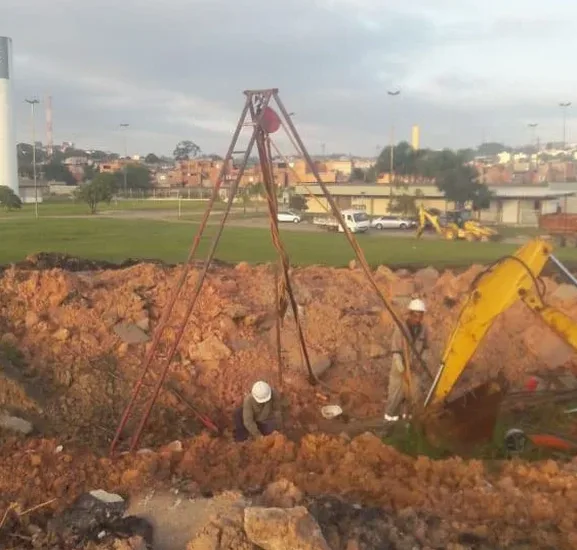
Critical ground factors in Fayetteville Arkansas
A common mistake in Fayetteville is assuming the clay is low-plasticity because it looks dry in summer. The soil cracks at the surface and feels hard. A contractor skips the Atterberg test and pours a slab on grade. Winter rains come. The clay absorbs moisture and swells. The slab heaves at the edges. Cracks appear in six months. The repair costs more than the test ever would. Another error is using only a grain size curve without the plasticity index. The grain size tells you the silt and clay fraction. But it does not tell you if that clay fraction is active. A soil with 30 percent clay and high plasticity behaves very differently from one with low plasticity. The Atterberg limits catch that distinction. For Fayetteville sites near the West Fork or White River alluvium the risk is higher. Those deposits can have expansive smectite layers. Testing is not optional there.
Our services
Our lab runs Atterberg limits as a standalone test or as part of a full geotechnical package. Turnaround is fast. We know contractors in Fayetteville need results to keep the job moving.
Atterberg Limits (Liquid & Plastic)
Single-point or multi-point liquid limit. Plastic limit by thread-rolling. Plasticity index calculated. ASTM D4318 compliant. Report includes natural moisture comparison.
Combined Classification Package
Atterberg limits plus grain size by sieve and hydrometer. Full USCS classification with group symbol and name. For Fayetteville sites needing a complete soil profile.
Shrinkage Limit
Shrinkage limit test for expansive clay characterization. Useful for Fayetteville sites with high-plasticity clays where volume change potential must be quantified.
Common questions
How much does Atterberg limits testing cost in Fayetteville?
The test runs between US$60 and US$100 for liquid limit and plastic limit combined. Shrinkage limit adds a small fee. Volume discounts apply for three or more samples from the same project.
How fast can I get results?
Standard turnaround is 48 to 72 hours after the sample arrives at the lab. Rush processing is available. We email the report as a PDF. The test itself takes about three hours of technician time once the sample is prepared.
What sample size do you need?
We need about 500 grams of material passing the No. 40 sieve. Send a larger bag if the soil has gravel. We will sieve it in the lab. The sample should be bagged to preserve natural moisture if you want that comparison.
Why do Atterberg limits matter for Fayetteville foundations?
The residual clays in Fayetteville can be expansive. The plasticity index tells you the moisture range where the soil behaves plastically. A high PI means the soil swells and shrinks a lot with moisture changes. That directly affects footing depth and slab design.