A 450-foot concrete access road for a new cold storage facility off Wedington Drive started showing uncontrolled cracks within 18 months of placement. The original design had no dowel baskets at construction joints and assumed a uniform k-value of 150 pci across the entire alignment. Fayetteville's residual soils don't work that way: weathered Boone Formation limestones interbedded with pockets of fat clay create subgrade stiffness variations of 40 to 200 pci within 100 linear feet. Our team re-calculated the Westergaard edge-loading stresses using actual plate load test data from the site, thickened the slab from 6 to 8 inches at the transition zones, and specified epoxy-coated dowels at all contraction joints. Three years later, the replacement pavement shows zero faulting. That is the difference between a generic concrete spec and a site-calibrated rigid pavement design that accounts for Northwest Arkansas geology.
Concrete pavement fails at the joints, not in the slab interior. Getting the dowel diameter, spacing, and alignment right matters more than adding a half-inch of concrete thickness.
Scope of work in Fayetteville Arkansas
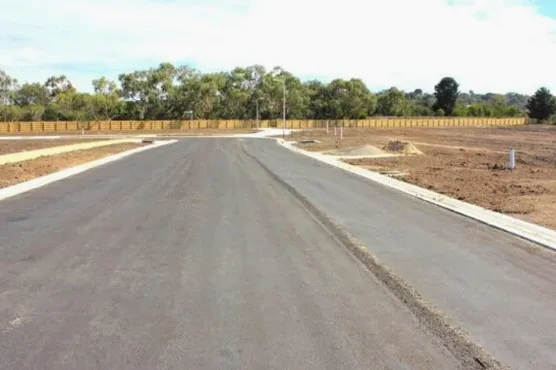
Critical ground factors in Fayetteville Arkansas
Fayetteville sits on the Springfield Plateau, where the Boone Formation limestone weathers into a mantle of stiff red clay with plasticity indices frequently above 30. That clay shrinks and swells by 15 to 25 percent volume across seasons. A rigid pavement slab bridging two subgrade zones with different swell potentials develops curling stresses that exceed the concrete's modulus of rupture within the first year. Add to that the freeze-thaw cycling: Fayetteville averages 55 freeze-thaw days annually according to FHWA climate data, and poorly drained base courses turn into frost-susceptible lenses. The combination of expansive subgrade, frost heave, and heavy truck traffic on US 71 access roads creates fatigue cracking patterns that a standard AR DOT Class S concrete mix cannot handle alone. Our designs address this with thickened edge sections, positive transverse drainage gradients of 2 percent minimum, and vapor barriers under interior slabs on grade where floor coverings are moisture-sensitive.
Our services
We provide rigid pavement design services tailored to the subgrade conditions and loading requirements of Northwest Arkansas projects. Each deliverable includes the slab thickness calculation, joint layout plan, base and subbase specification, and construction sequence recommendations.
Concrete thickness design (PCA / AASHTO method)
We compute the required slab thickness using the Portland Cement Association method or the AASHTO 1993 rigid pavement equation, inputting your traffic loads (ESALs), concrete flexural strength, and the site-specific k-value from plate load or CBR correlation tests.
Joint layout and load transfer design
Detailed plan sheets showing contraction joint spacing, dowel basket locations, tie bar diameters, and isolation joint details at columns and pits. We calculate bearing stress per AASHTO to avoid dowel looseness or concrete crushing at the joint face.
Subgrade stabilization and base specification
For Fayetteville's expansive clays, we specify cement or lime treatment depths based on Atterberg limits and pH testing, plus drainable base gradations that meet AR DOT Class 7 aggregate requirements while maintaining permeability above 1,000 ft/day.
Common questions
What is the typical cost range for a rigid pavement design in Fayetteville?
For a standard commercial parking lot or access road design including slab thickness calculations, joint layout plans, and subgrade stabilization recommendations, the engineering fee typically ranges from US$2,060 to US$6,730 depending on the paved area size and the number of subgrade transition zones requiring analysis.
When should I choose rigid pavement over flexible pavement for a Fayetteville project?
Rigid pavement distributes wheel loads over a wider area and resists deformation better on expansive clay subgrades. It is the preferred choice for truck terminals, loading docks, and industrial yards where point loads from trailer landing gear or forklifts are concentrated, and where long-term maintenance access is limited.
How do Fayetteville's freeze-thaw cycles affect concrete pavement joints?
With 55 freeze-thaw days per year, water trapped in unsealed joints expands upon freezing and spalls the joint edges. We specify silicone or preformed compression seals in all transverse joints, and we require saw-cutting within 12 hours of finishing to control early-age thermal cracking before the first winter cycle hits. More info.